
Specimen Showcase | Midnight Killer in the Woods

Scolopendrophobia😱, the fear of centipedes, may be caused by a past traumatic experience with a centipede. Here, we’ll tell you more about these fascinating creatures🤩, so even if you are still scared of them, at least you may see them under a new light😲.
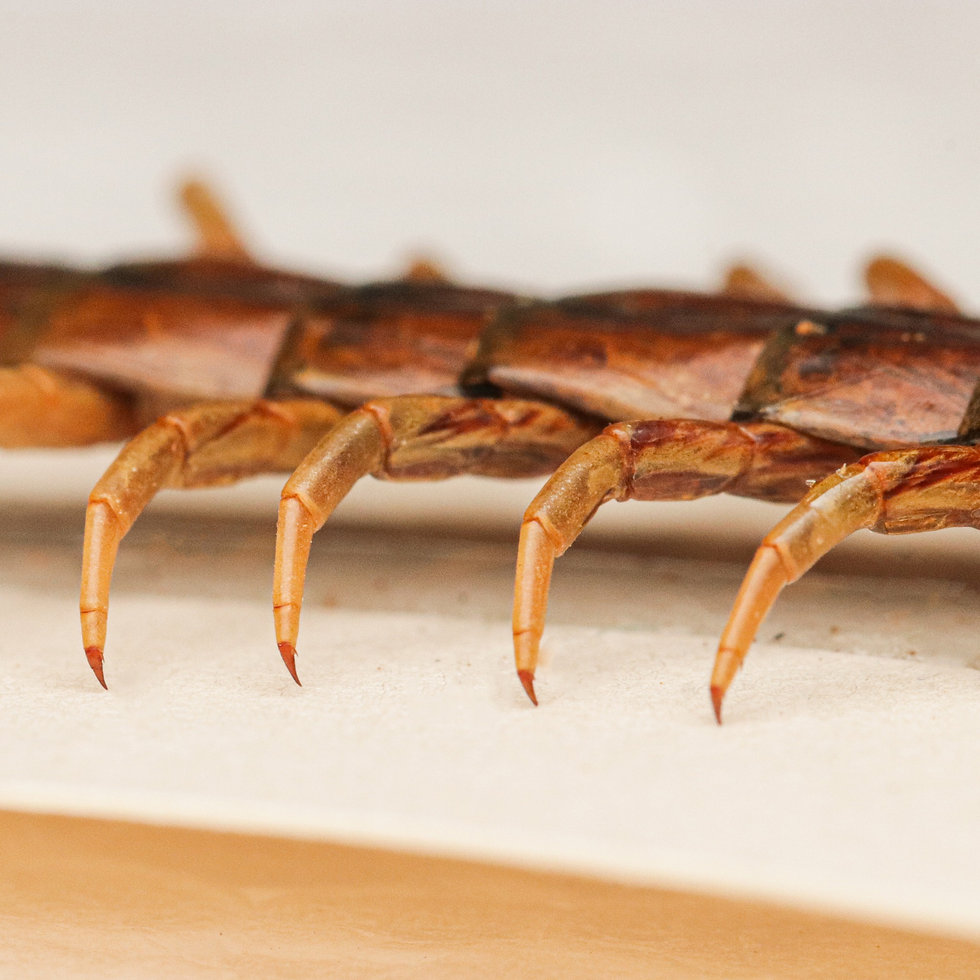
Some people are horrified by them due to their countless numbers of legs🦵🏼… Funny enough, this intimidating appearance is their distinct feature which makes a centipede a centipede🤔. Centipedes are arthropods, meaning they possess an exoskeleton🤖 with a cuticle (“skin”) made from chitin, which are very sturdy, and can be further differentiated into myriapods (meaning “ten-thousand foot”)😨, together with other animals that own numerous pairs of legs, like millipedes (Diplopoda). Fun fact, despite their name of centipedes (meaning “hundred-foot”💯), no centipedes own a total of exactly 100 legs. These organisms have a pair of legs per body segment👣, and the longer the body, the more legs they have... ranging from 15 up to 177 pairs (354 legs!)🤔, and the number of pairs must always be an odd number, therefore, their name is technically incorrect😳! Our pictures here show some closeup photos of a centipede species called 𝘚𝘤𝘰𝘭𝘰𝘱𝘦𝘯𝘥𝘳𝘢 𝘮𝘰𝘳𝘴𝘪𝘵𝘢𝘯𝘴 (Linnaeus, 1758), the Tanzanian blue ringleg, which presents a cosmopolitan distribution🌏, thus found in almost all continents.
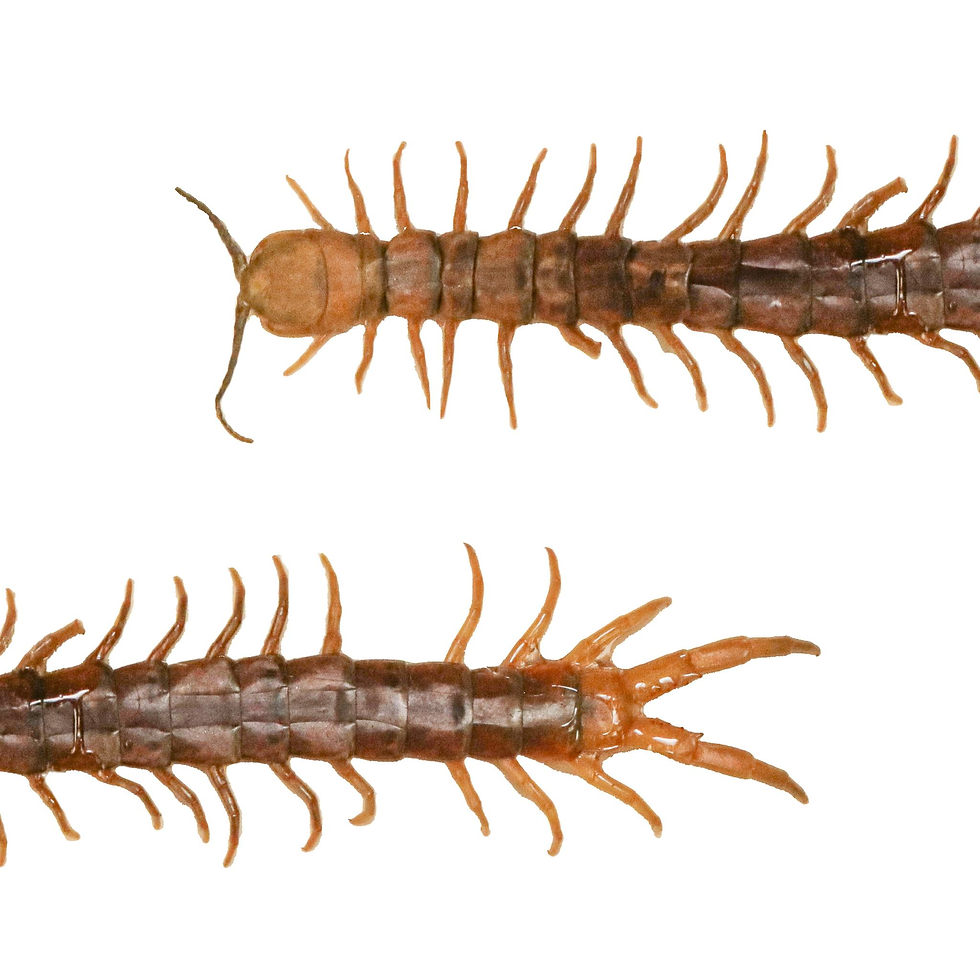
The Tanzanian blue ringleg is one of the largest centipedes around the globe🧐, with adults reaching 12 to 13 centimetres in length. They can be recognized thanks to their bright-red heads🔴 alongside with a brownish coloration with striped patterns🟤 which can be easily seen when encountering one. The species’ coloration, however, presents some variations depending on where they live, due to climatic factors such as temperature and humidity. Just like other centipedes, it presents a flattened head, with two long and segmented antennae at its front end. They also possess a pair of mandibles to sustain a powerful grip💪🏻 on their prey. The first pair of appendages modifies and extends from the first body segments to under the cranial and forms pincer-like “fangs” named forcipules that are used to inject venom and paralyse their prey💀. Centipedes are the only known animal that possesses modified front legs to inject venom🦿. It is a nocturnal hunter, starting their activity only after sunset🌄, and their diet mainly comprises other arthropods and some vertebrates, like small rodents.🐀
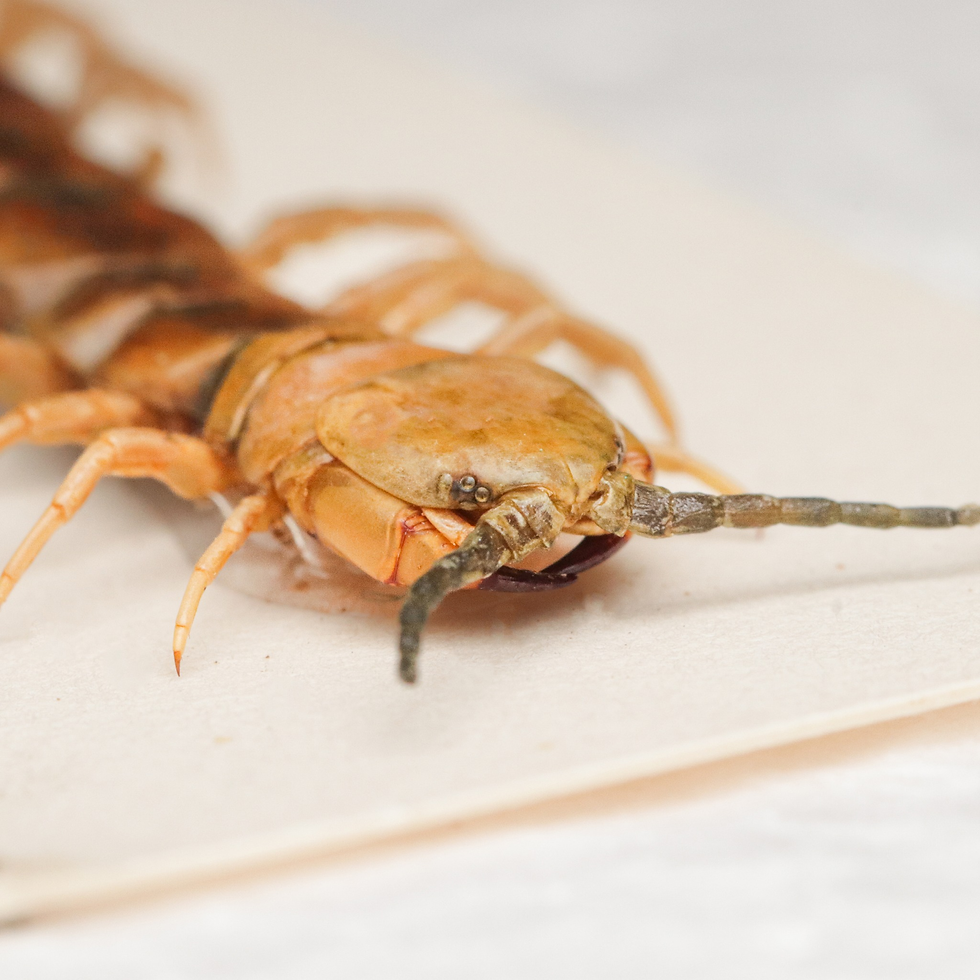
These centipedes are true opportunists in the woods, actively searching for prey using their antennae since they have very poor vision🧐. They are also very aggressive; once a prey is spotted, they will quickly crawl towards it, bite and inject paralyzing venom😈. Then, they will latch onto the prey using their mandibles. After the venom takes effect, the prey will no longer be able to move☠️. The venom from a Tanzanian blue ringleg is a kind of neurotoxin, which attacks the nervous system, causing a communication breakdown between the brain and the body🧠, which ultimately shuts down the prey’s body. Finally the centipede can enjoy its long-waited meal🍽️! But worry not, a bite from this centipede will not be lethal to us, just cause some excruciating pain😏! This venom, however, can also have positive properties when used efficiently as it was shown to suppress the development of atherosclerosis and possess antimicrobial activities😲. In addition, other substances contained in their body potentially present antitumor and immunopotentiating activities and can thus represent an avenue for cancer treatment🤩.

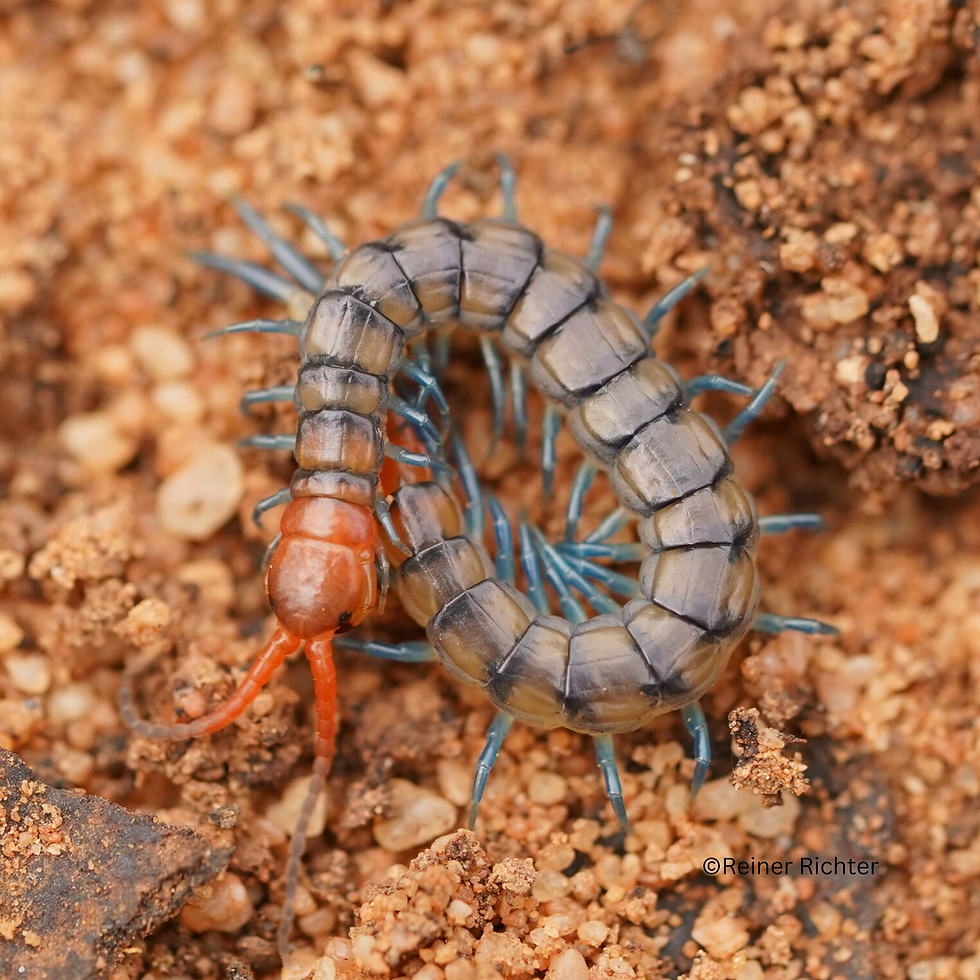
Back to our centipedes, we can also observe mesmerizing acts towards their young ones too🤰🏻! When breeding, the male centipede deposits a sperm-containing packet in the sexual organs of a female centipede. When the time is ready, the female will construct a brood chamber under the substrate🥰, usually in moist and protected areas, for its offspring. After laying the eggs, the female centipede will show parental care🤱🏻 and form a double coil around the eggs until they hatch. Unfortunately, when stressed out😰, the female will have filial cannibalism, which means it consumes its own eggs 😳 and embryos in order to minimise energy loss associated with an attack or a perilous situation, and increase its chance of survival to raise another clutch of eggs.
Fascinated or mystified by these creatures that lie beyond our general knowledge🤔? Need not to wander into the woods, but be sure to sign up for our guided tours🤓 and admire these haunting animals up close at the Hong Kong Biodiversity Museum🤩!
Text: Ryan Tse


Comments